I'm a second-year PhD student at Stanford, advised by Kayvon Fatahalian. My research is focused on building high-fidelity, high-performance simulations for biomechanics and training RL control policies. I'm also fortunate to collaborate with Karen Liu and Scott Delp. Before Stanford, I was an undergraduate at Cornell, advised by Itai Cohen and Jim Sethna. During this time I also worked with R. Stephen Craxton.
Education
Stanford University
September 2024 - Present
PhD in Computer Science
Cornell University
August 2020 - May 2024
B.A. in Computer Science, Physics (summa cum laude)
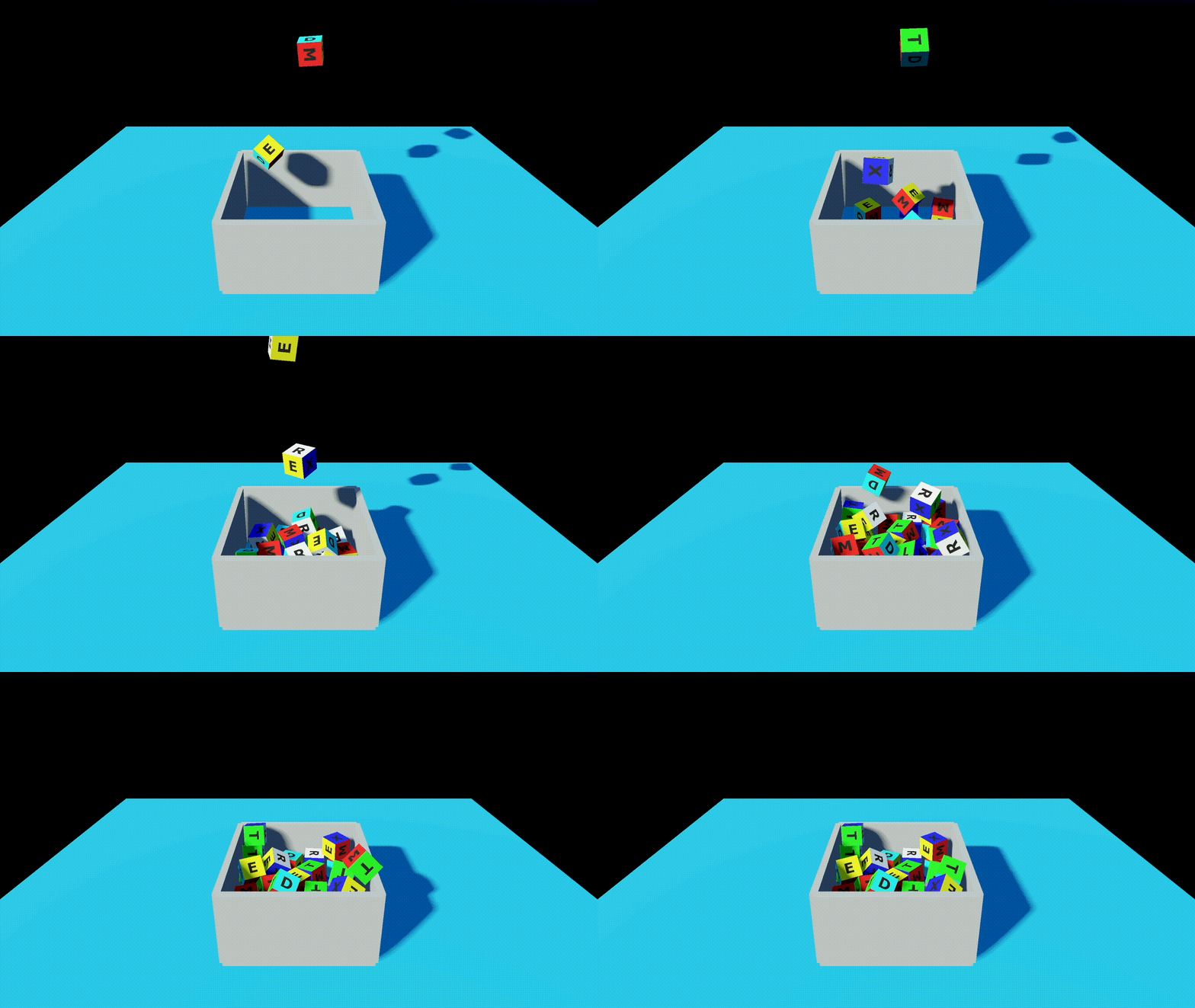
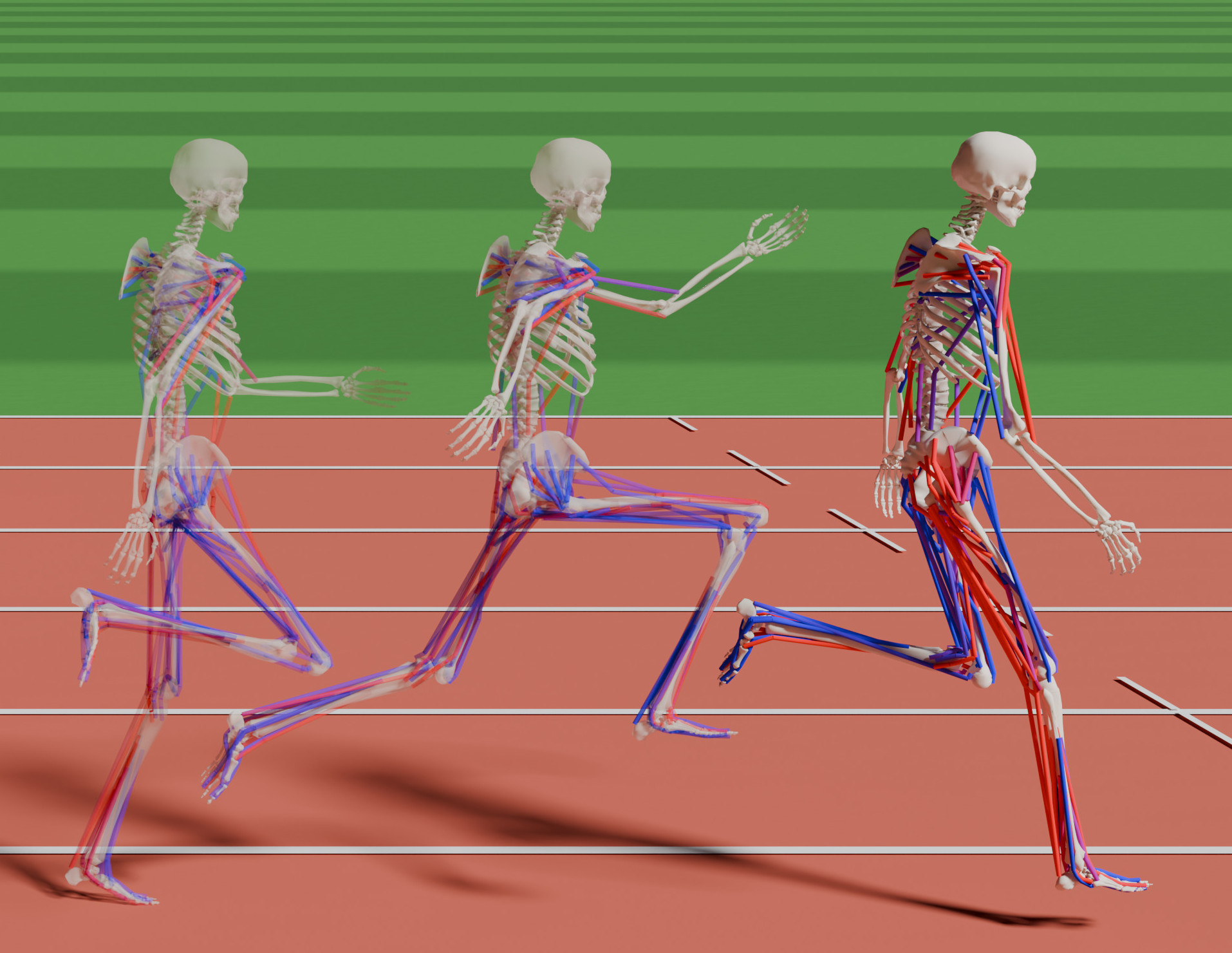
We present a muscle-driven simulation system for generating biomechanically accurate motion for high-speed athletic locomotion tasks that does not require motion demonstrations. Our approach integrates state-of-the-art biomechanical athlete models into a new, high-performance GPU simulator capable of running at 700x real-time. High-throughput simulation enables large-batch reinforcement learning to train control policies that operate directly in the model’s high-dimensional muscle excitation space, and are guided only by task-specific episode termination conditions and a reward that encourages maximizing speed while reducing forces needed to respect joint limits. These policies train within a few hours on a single GPU and generate “near visually realistic” motions for complete athletic activities such as a full 100-meter sprint or performing popular athletic locomotion drills like side-shuffling, backpedaling, and carioca. The generated sprinting motions also exhibit strong agreement with experimental data captured from elite sprinters.
Providing Rapid Design Feedback for 3D Obstacle Course Games Using Constrained Solvability Queries
Zander Majercik, Sharon Zhang, William Wang, and 6 more authors
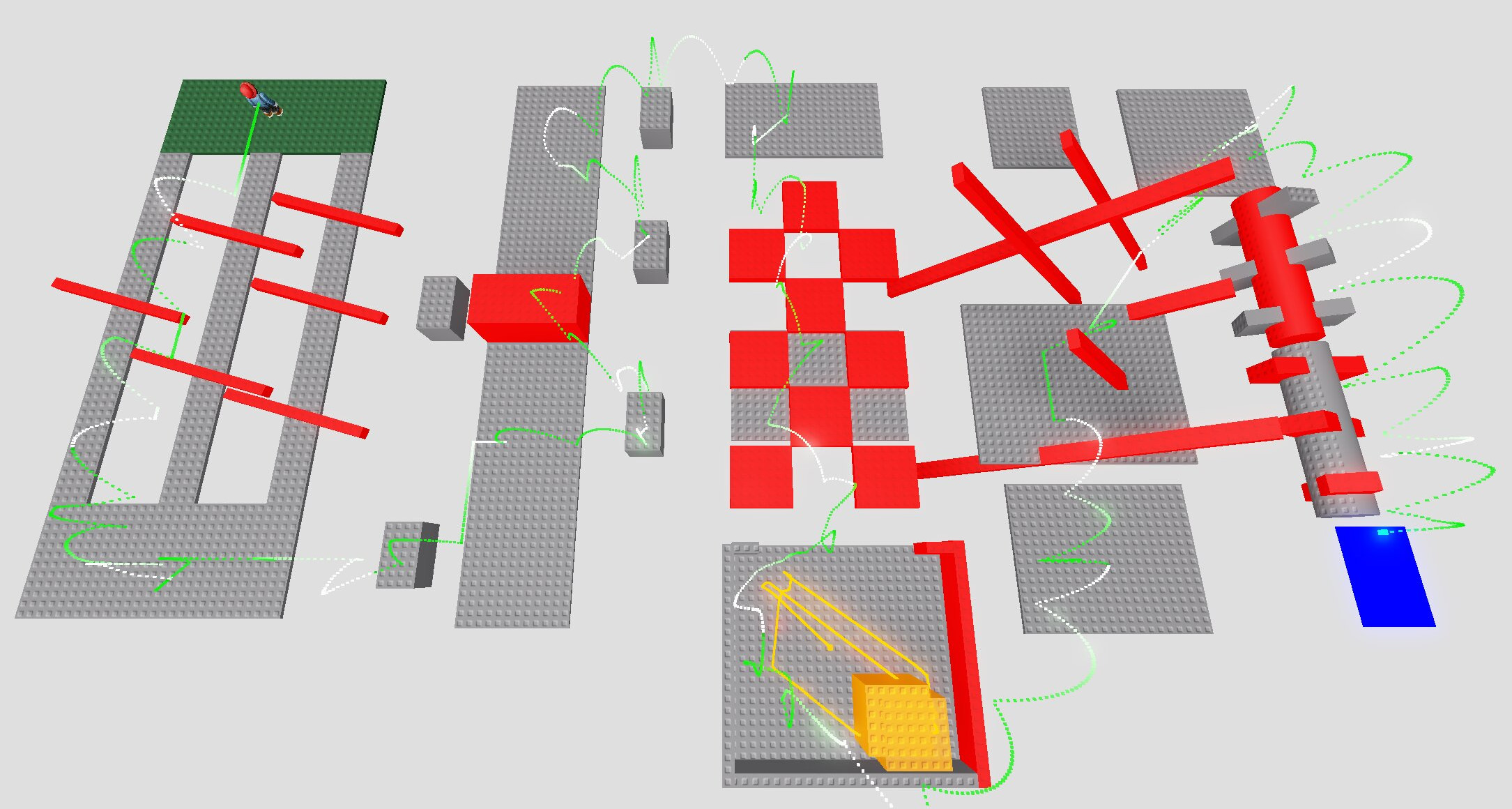
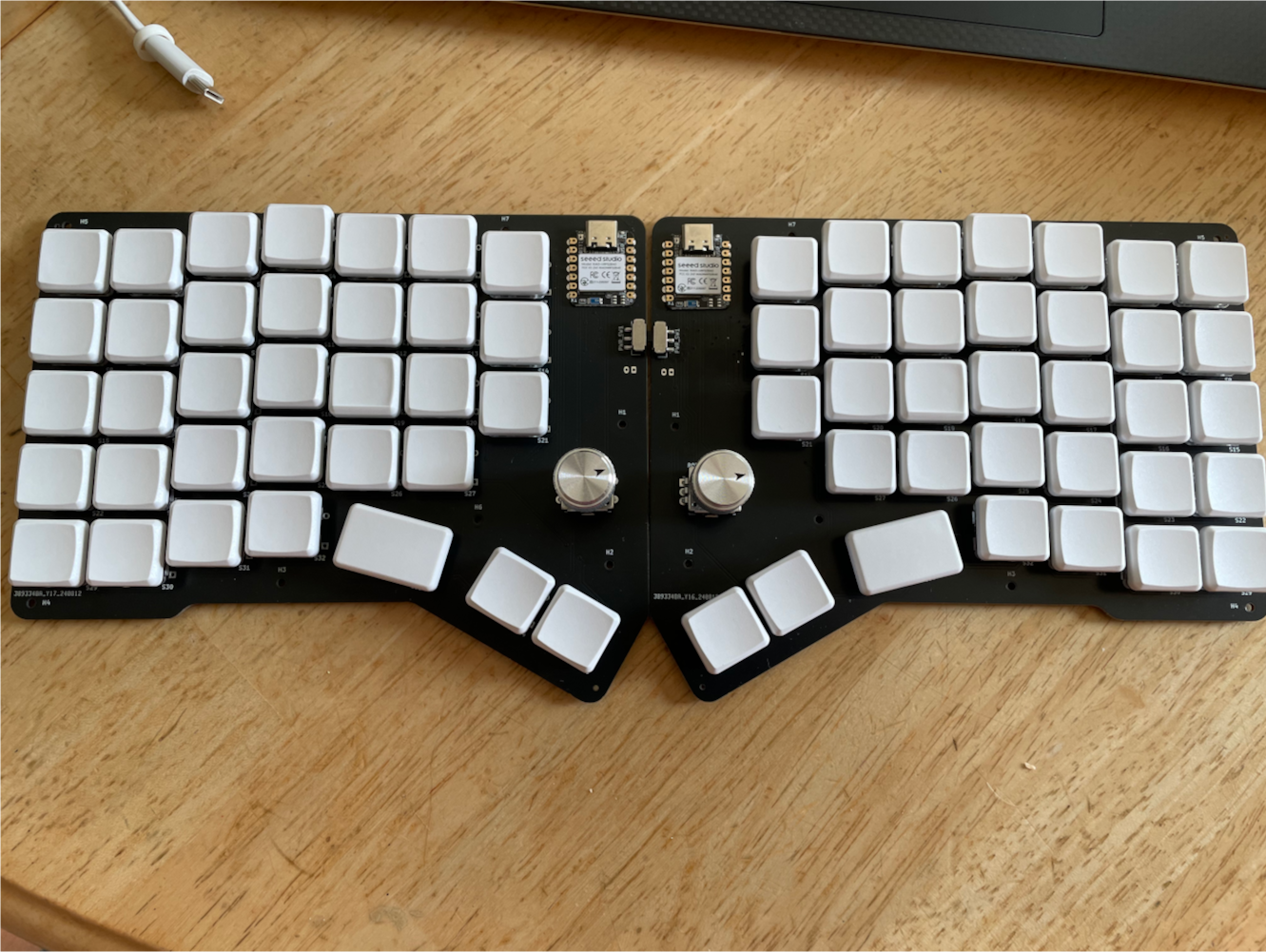
We present a system that aids the design of 3D obstacle course games by providing designers with immediate feedback on how obstacles can be solved. Our core contribution is a system for querying for solutions (sequences of player actions) to an obstacle that adhere to designer-specified constraints (avoid a region, travel through a given waypoint, only perform two jumps). To solve a wide range of obstacle designs quickly, we author a high-performance implementation of the Go-Explore algorithm for exploratory search, and guide search with an obstacle solving agent trained offline using RL. To further accelerate search, the system carries out exploration using a custom GPU-accelerated obstacle course game simulator that generates playthrough experience at nearly 14,000x real time, 60-fps gameplay. Through design studies, we demonstrate that the use of constrained solvability queries in a tight interactive loop is sufficiently expressive to help designers understand ways an obstacle can be solved, why it cannot be solved, identify undesirable solution paths, and evaluate approximate solution difficulty. This allows them to pursue new design directions they originally did not anticipate. Human playtesting of obstacles designed using our system confirms that human players indeed play the obstacles in the manner the designers intended. We will release code for our interactive tool, simulator, training setup, and procedural level generation system upon publication.
CuGen: A GPU-accelerated framework for large-scale genomics
Tuomo Kiiskinen, Joshua Richland, William Wang, and 5 more authors
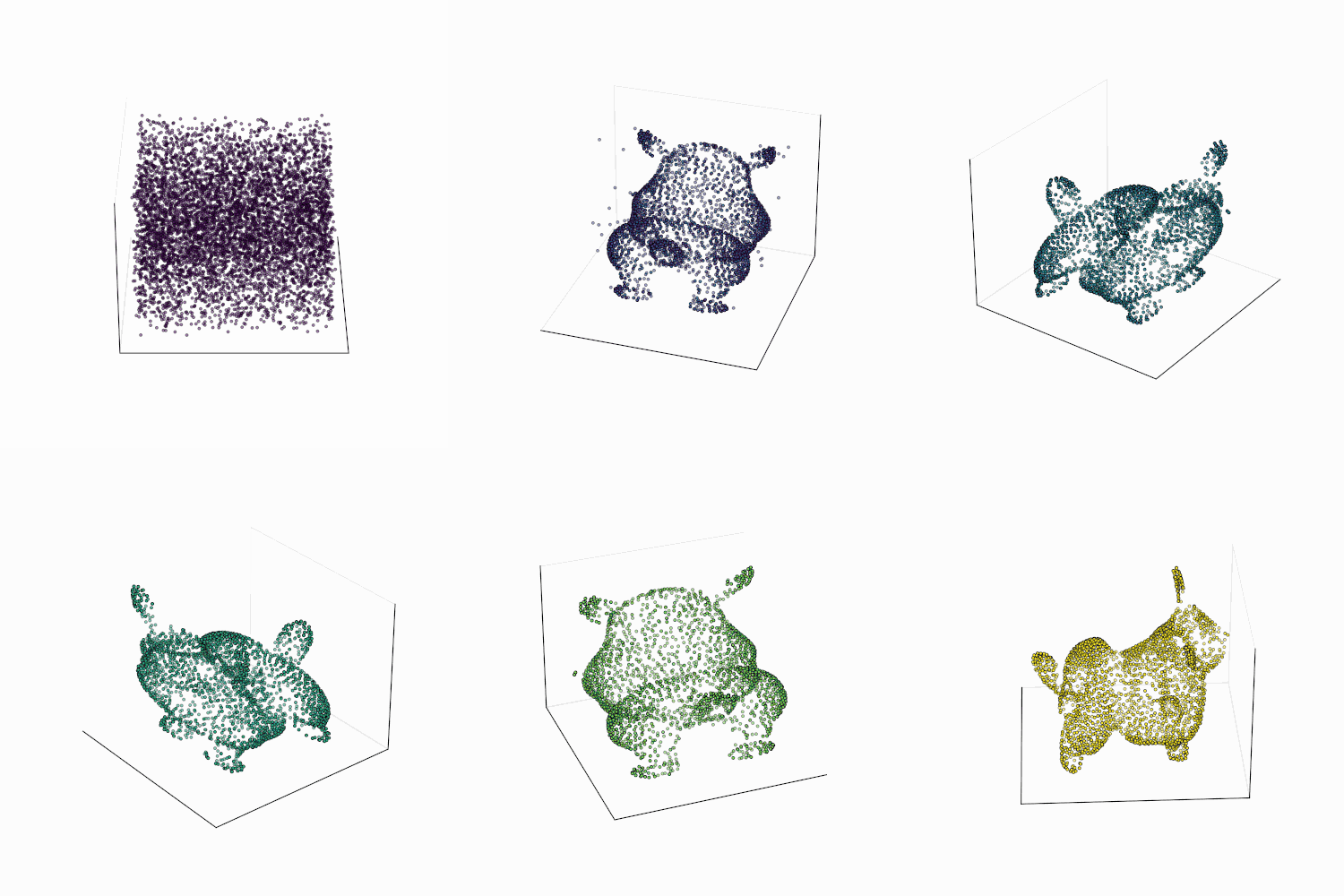
Biobank-scale genomic analyses remain computationally expensive, CPU-bound workflows, particularly when adjusting for confounding. Here, we present CuGen, a GPU-accelerated framework for large-scale genomics. CuGen uses UltraLasso, a novel hierarchical application of univariate-guided sparse regression (uniLasso), to select a compact, phenotype-informed active set of fewer than 30,000 variants. This achieves robust leave-one-chromosome-out (LOCO) confounding control, enabling both downstream GWAS and in-sample fine-mapping. Additionally, we introduce the .cugen file format, a genotype representation designed for memory-optimized, high-throughput streaming and random access on GPU hardware. Building on this substrate, we provide a general GPU-accelerated genomics toolkit handling polygenic prediction, data manipulation, quality control, analysis, and visualization. We demonstrate CuGen’s efficacy in the UK Biobank with up to 408,624 individuals, where the full GWAS pipeline and fine-mapping against 6.8 million imputed variants completes in approximately 10 minutes on a single high-throughput GPU with 80 GB of memory. The pipeline scales efficiently to massive phenome-wide analyses with sublinear resource consumption.
Rigidity transitions in anisotropic networks: a crossover scaling analysis
William Wang, Stephen J. Thornton, Bulbul Chakraborty, and 7 more authors
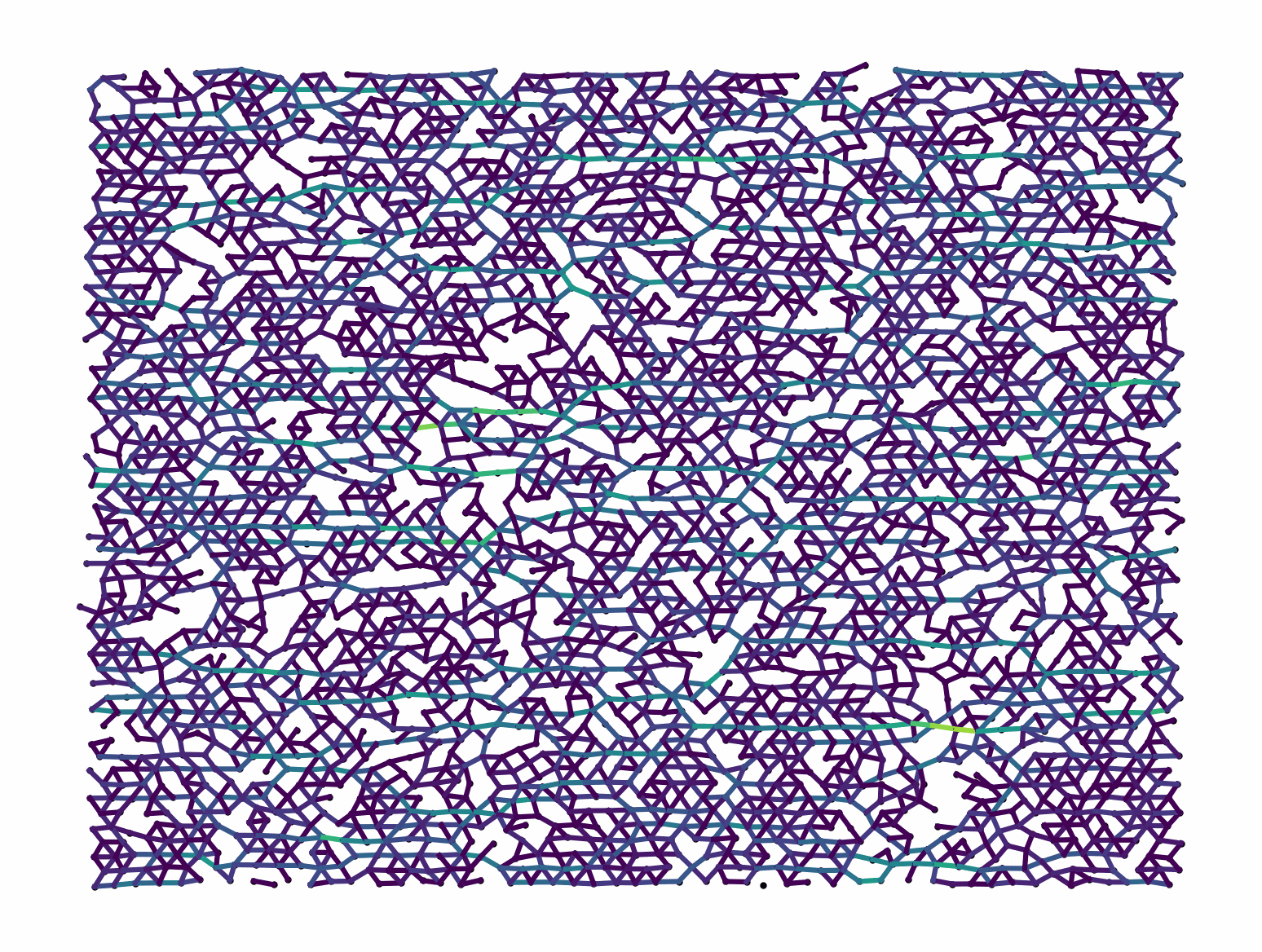
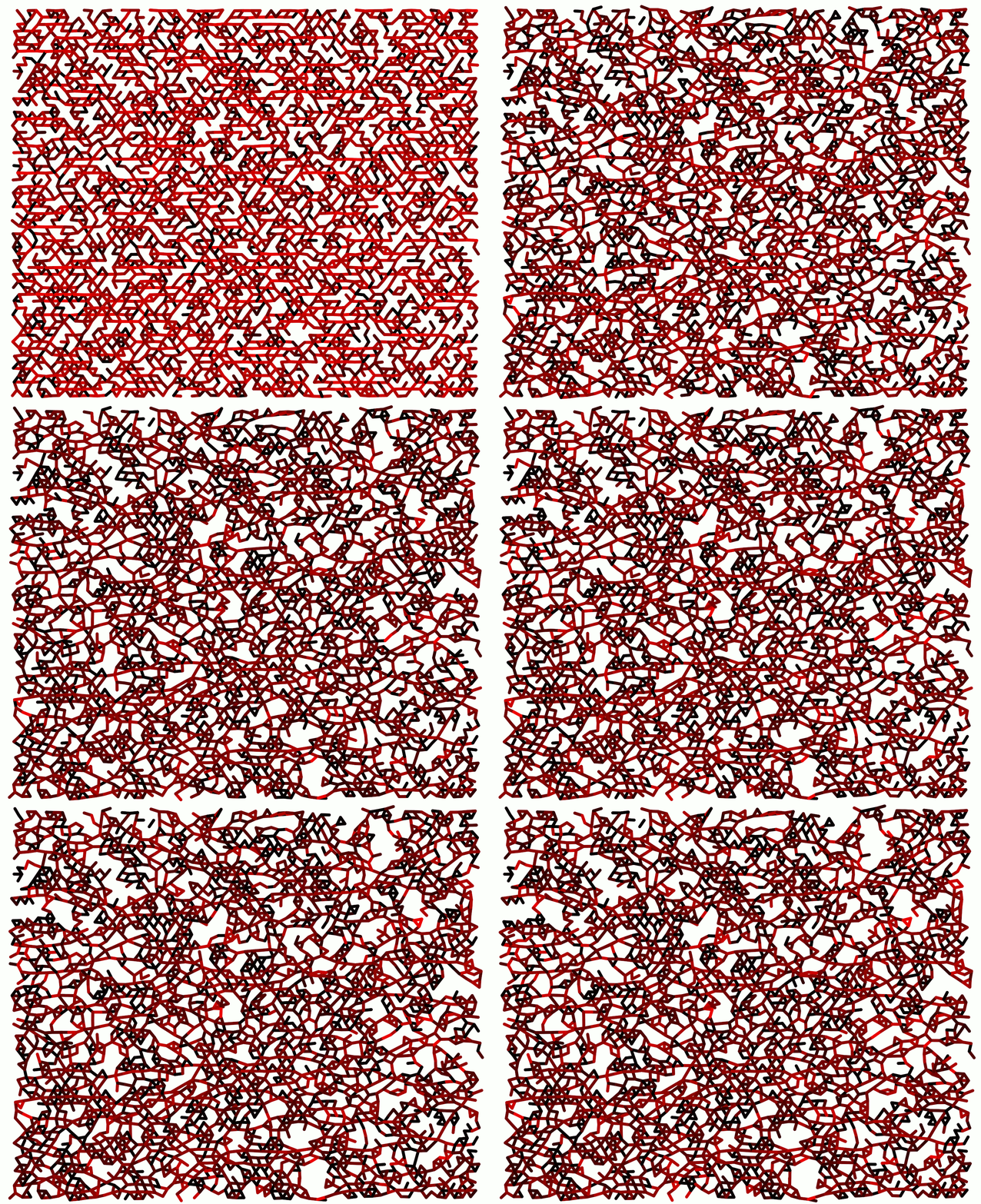
We study how the rigidity transition in a triangular lattice changes as a function of anisotropy by preferentially filling bonds on the lattice in one direction. We discover that the onset of rigidity in anisotropic spring networks on a regular triangular lattice arises in at least two steps, reminiscent of the two-step melting transition in two dimensional crystals. In particular, our simulations demonstrate that the percolation of stress-supporting bonds happens at different critical volume fractions along different directions. By examining each independent component of the elasticity tensor, we determine universal exponents and develop universal scaling functions to analyze isotropic rigidity percolation as a multicritical point. Our crossover scaling approach is applicable to anisotropic biological materials (e.g. cellular cytoskeletons, extracellular networks of tissues like tendons), and extensions to this analysis are important for the strain stiffening of these materials.
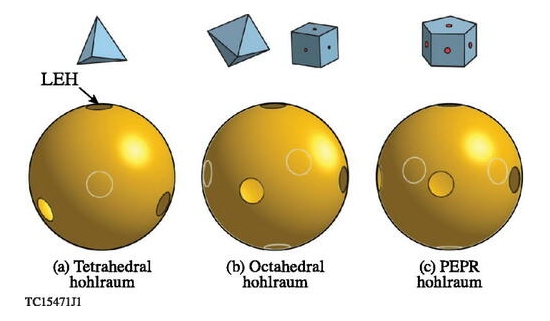
A new configuration is proposed for spherical hohlraums on OMEGA in which seven laser entrance holes (LEHs) are used—five around the equator and one at each pole. This is known as the PEPR (pentagonal prism) hohlraum. A new view-factor code LORE is used to model the PEPR hohlraum and compare its performance with tetrahedral hohlraums shot on OMEGA. With optimization of beam pointings, the PEPR hohlraum produces a nonuniformity ranging from 1.1% (rms) at low albedos to 0.6% at high albedos. The tradeoffs between hohlraum-to-capsule ratio, uniformity, and background radiation temperature have been explored, and it has been shown that larger LEH radii on the poles can result in a modest improvement in uniformity. The seven-hole PEPR hohlraum is well matched to the OMEGA symmetry and promises to provide insight into the performance of spherical hohlraums including octahedral (six-LEH) hohlraums.
A New Beam Configuration to Support both Spherical Hohlraums and Symmetric Direct Drive
R. Stephen Craxton, William Wang, and Michael E. Campbell
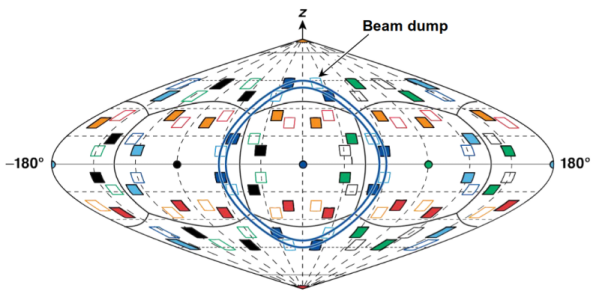
Spherical hohlraums, including tetrahedral hohlraums shot on OMEGA and octahedral hohlraums (with six laser entrance holes on the faces of a cube) proposed by Lan et al. promise significant uniformity advantages compared with conventional cylindrical hohlraums. This work advocates a minor rearrangement of the port locations of the 48 quads proposed for irradiating octahedral hohlraums on the SG4 laser. This will enable symmetric direct-drive implosions to be carried out in the same target chamber with minimal adjustments of the beam pointings (no more than about 12 degrees, in contrast to 35 degrees in typical National Ignition Facility direct-drive designs). View-factor calculations for octahedral hohlraums find essentially the same excellent performance as in Ref. 2, with the capsule nonuniformity ranging from 0.6% (rms) at early times to <0.1% at later times.